
Urgent Game Plan: AI Literacy Amid Rising U.S. Job Losses

Share Post :

Urgent Game Plan: AI Literacy Amid Rising U.S. Job Losses

A Fox 5 Atlanta interview explains why AI literacy separates professionals who thrive from those left behind in the workforce transformation.

The statistics read like warnings from an economic alarm system. In the first seven months of 2025, over 77,999 tech workers lost their jobs, directly attributed to AI. Entry-level positions dropped 15% year over year, while job postings mentioning AI surged 400% during the same period. The paradox is clear: this is not simply about jobs disappearing. It’s about mismatched capabilities at scale and the growing importance of AI literacy.

During a recent appearance on Good Day Atlanta, Alicia Lyttle sat down with Paul Milliken to address workforce anxiety. Her message cut through the noise with clarity: the real crisis is not AI replacing humans. It is professionals who lack the skills considered fundamental in today’s workplace.

The Numbers Tell a Different Story

Paul Milliken asked whether fears about AI taking jobs were founded. Alicia reframed the conversation.

“Yeah, we’re seeing a lot of job loss and jobs created by AI in this AI revolution right now. What people need to think about is, how do I become more AI literate, so that I become more valuable in this AI revolution, this time that we’re in today?”

McKinsey research shows that the number of workers in occupations requiring AI fluency grew sevenfold from 2023 to 2025, while 40% of employers expect to reduce their workforce in roles where AI can automate tasks. Goldman Sachs reports that unemployment among 20–30-year-olds in tech-exposed occupations has risen by nearly 3 percentage points. At the same time, STEM employment overall has grown from 6.5% of all jobs in 2010 to nearly 10% in 2024.

The story is clear: companies are not simply cutting jobs because machines can replace humans. They are restructuring to demand hybrid human-AI collaboration skills. Some professionals thrive under this transformation while others face vulnerability.
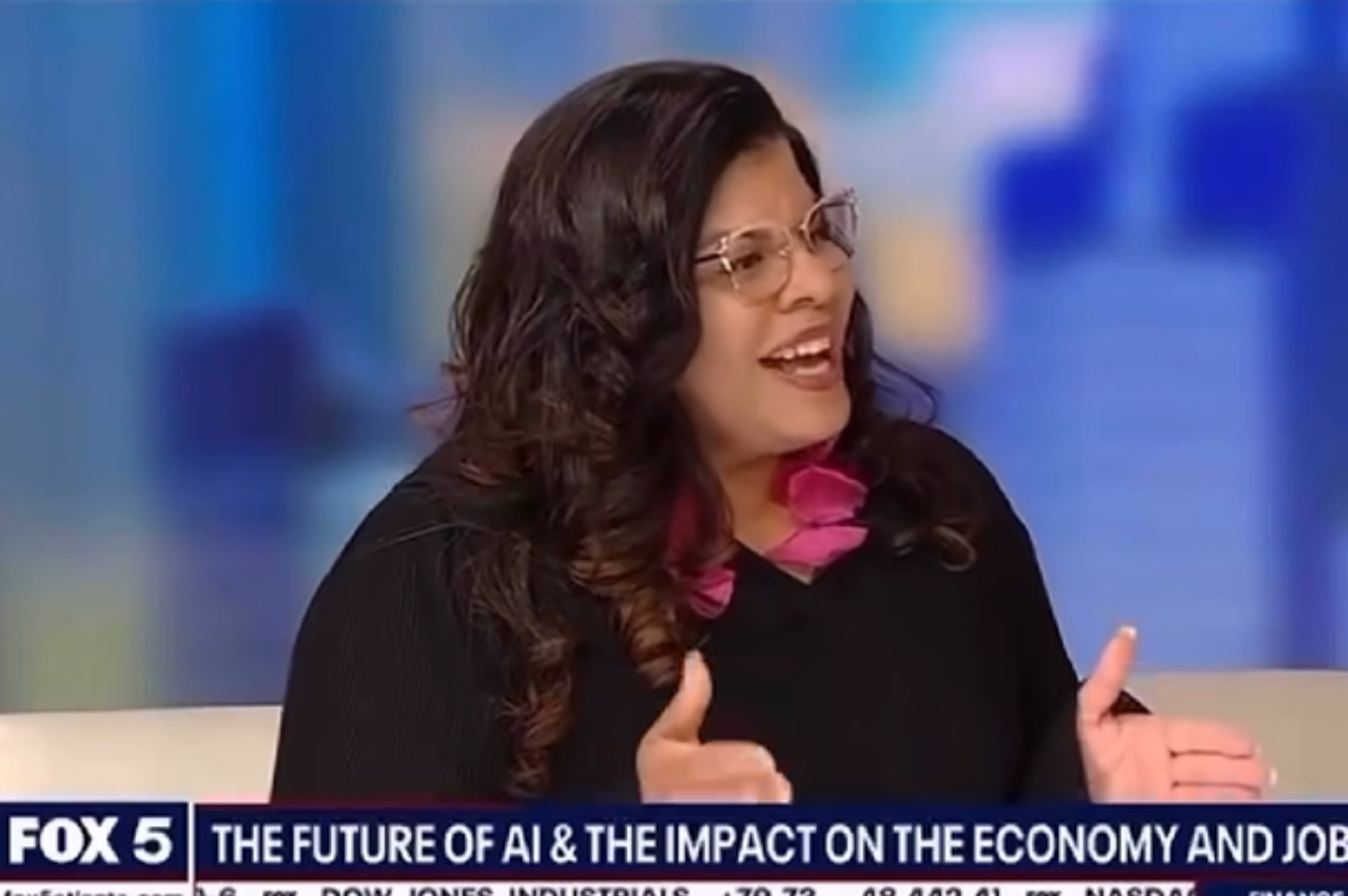
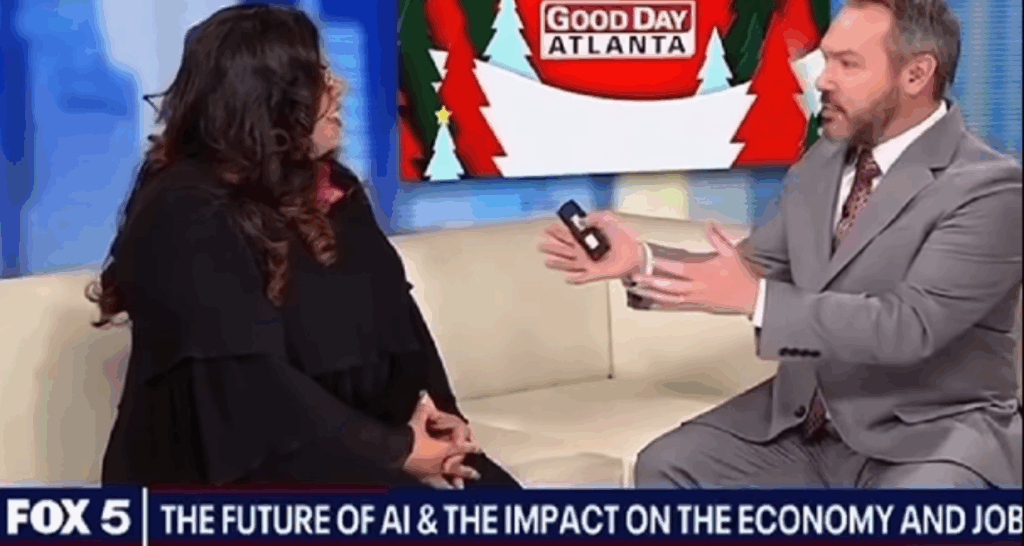
Alicia Lyttle speaking on AI literacy and economic impact during FOX 5 news segment
Alicia Lyttle explains why AI literacy is the key to thriving in today’s shifting job market.

Building AI Literacy with Simple Tools

When asked where to begin, Alicia offered simple guidance.

“It’s actually saying, Okay, what AI tool can I use? And the most common one is ChatGPT. It has a free version. Just go to ChatGPT.com and ask, this is who I am, this is my profession. How can I use AI to level up? How can I use AI to future proof myself? And that’s the first step. Ask it a question.”

PwC’s 2025 Global AI Jobs Barometer found that workers with AI skills earn a 43% wage premium compared to peers without those skills. Lightcast research shows positions mentioning AI skills offer salaries 28% higher, roughly $18,000 more per year. Basic AI tools like ChatGPT or Microsoft Copilot often provide the skills needed to start building value immediately.

Security settings are essential. Alicia emphasized that professionals should confirm privacy and platform settings before inputting sensitive information.

Small Business Applications That Drive Revenue

Alicia shared guidance for small business owners on leveraging AI to grow revenue.

“Small business owners can just go to ChatGPT and say, This is my business. This is what my business does. Give me three ways that I can 10x my revenue. This is what I made last year. This is what I want to make this year. The more information you give it, the better the results.”

Applications span content creation, marketing, customer service, and finance. AI handles repetitive tasks, freeing humans to focus on strategy, creativity, and decision-making that differentiate businesses in competitive markets.

Why AI Literacy Shapes Hiring and Careers

Alicia emphasized the importance of AI literacy for job seekers.

“It’s 100% vital. When corporations, governments, and organizations look for new hires, they have to know how to use AI tools. It doesn’t matter if it’s college graduates or someone with 30 years of experience. HR departments are now asking, how do you use AI, what AI tools are you using?”

Job postings requiring generative AI skills quadrupled over the past two years. AI literacy now determines who can apply expertise effectively and access higher-paying, in-demand roles.

“The new jobs now are AI-related. So if you want a higher-paying job, look at courses or certifications in AI to pivot into these fields,” Alicia added.

Personal Applications That Build Skill

Beyond professional tasks, Alicia showed how AI can make creative projects easier. She created a holiday song for her mother using Suno and a themed photo shoot through ChatGPT’s image tool.

“You can upload a photo and see it transformed. My Christmas photos this year look amazing.”

These experiences teach skills that transfer to work: prompt refinement, iteration, and pattern recognition. Exploring AI creatively develops intuition and problem-solving abilities useful in professional contexts.

The Window for Advantage

The current period rewards proactive learners. McKinsey research indicates employees hired based on skills rather than credentials see a 30% productivity boost in their first six months. Those building AI literacy now position themselves as indispensable in a workforce rapidly evolving around human-AI collaboration.

Want to get in touch with us?

Send us an email or complete the form below:

Email: [email protected] 

Contact number: (903) 437-7195

Send Message