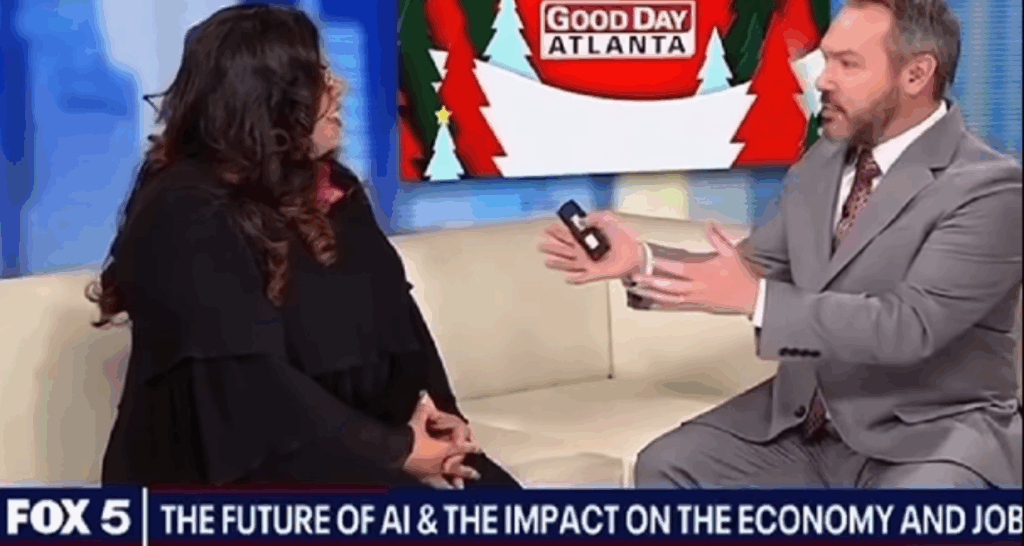
11Alive Interview: Why This Isn't a Jobs Crisis—It's an AI Skills Gap
Alicia Lyttle Joins Dan Kennedy to Discuss the Real Story Behind Surging Layoffs and What You Can Do About It
We’re seeing headlines that would make anyone anxious. Job cuts across America have surged past one million this year, numbers we haven’t seen since the darkest days of the pandemic. Tech giants are eliminating tens of thousands of positions, and it seems like every week brings another round of layoffs.
When 11Alive Morning News anchor Dan Kennedy invited our CEO, Alicia Lyttle, to discuss what’s really happening, she brought a message that cut through the fear: this isn’t about AI replacing humans. It’s about a massive gap between the skills people have and the skills today’s workplace desperately needs.
We wanted to share the conversation with you because if you’re watching these layoff announcements and wondering about your own job security, or if you’re a business leader trying to navigate this shift, Alicia’s insights offer both clarity and a practical path forward.
Watch the Full 11Alive Interview
The full 11Alive Morning News segment featuring Alicia Lyttle in conversation with Dan Kennedy, discussing the rise in layoffs, the growing AI skills gap, and what professionals and organizations can do next.
The Real Story Behind the Numbers
Dan Kennedy opened by acknowledging the anxiety many are feeling. Companies are citing AI adoption and automation as reasons for restructuring. Alicia clarified the situation:
“What we’re witnessing isn’t AI taking jobs away,” She explained. “We’re seeing a massive shift in what work looks like, and too many talented professionals simply haven’t been given the training they need to adapt.”
Companies are simultaneously laying people off and reporting that they can’t find the talent they need. LinkedIn indicates AI literacy is now the number one skill in demand. Research shows 20% of organizations say AI model and application development roles are hardest to fill, while another 19% struggle to find candidates with basic AI fluency.
The answer reveals what’s actually happening. Companies aren’t eliminating human roles because machines can do everything. They’re restructuring because employees lack the skills necessary to compete in an AI-enhanced workplace.
Who’s Getting Hit Hardest
Entry-level workers face significant challenges. Recent graduates enter the job market with degrees but often lack AI fluency. Job postings mentioning AI have surged 400% over the past two years, while entry-level corporate positions have dropped 15% year over year. Nearly half of Gen Z job seekers feel their degrees are less relevant in an AI-driven landscape.
Mid-career professionals face a different version of the challenge. Years of expertise alone are no longer enough. Accountants, marketers, and operations specialists must complement their knowledge with AI fluency to remain competitive.
“The tragedy,” Alicia told Dan, “Is that most of these individuals could absolutely learn these skills. They have the intelligence, work ethic, and commitment. What they lack is access to the right training at the right time.”
What Companies Keep Getting Wrong
Many organizations still treat AI adoption as a purely technical decision. They invest in tools, roll them out, and expect teams to adapt on their own.
“Organizations treat AI training as an afterthought,” Alicia explained. “They bring in new technology and assume people will figure it out, or they offer a basic workshop and assume that’s enough.”
Without structured training, even powerful AI systems fail to deliver results. Employees may understand capabilities in theory, but cannot consistently apply them in their workflows. Addressing this gap is essential to closing the AI skills gap.
Practical Steps You Can Take Right Now
Dan Kennedy asked Alicia what someone watching at home should do if they’re feeling anxious. Her advice was actionable:
“Spend 15 minutes a day learning AI. Really upskill yourself, knowing that AI literacy is the number one most in-demand skill right now. Get AI literate. Start using a tool. Dive in, and you’ll continue to improve.”
Alicia recommends real-world interaction with AI tools:
- Professionals can use ChatGPT to simulate role-specific problem-solving.
- Business owners can explore AI-driven planning to drive revenue growth.
- Parents can introduce children to AI early with tools like Google Gemini, preparing them for future workplace demands.
Why Business Leaders Need to Act Differently
Workforce development is a strategic investment. Successful organizations integrate training into their AI implementation strategy.
- Technical teams receive deep, role-specific training.
- Business teams learn practical AI applications for their functions.
- Leadership gains insight into AI’s capabilities and limitations to make informed decisions.
The organizations navigating this transition effectively are those that commit deeply to upskilling their people, recognizing that capability drives competitive advantage.
A Choice We All Face
The timing of this 11Alive interview matters. Organizations and professionals alike face a choice:
- Implement AI tools without adequate training and risk stagnation, or
- Invest comprehensively in people and build internal capabilities to thrive.
“The conversation we’re having today isn’t about whether AI will transform work, that’s already happening,” Alicia told Dan. “The conversation is about whether we’re going to prepare people for that transformation or leave them behind.”
Our Commitment to You
AI InnoVision consistently centers the human experience in AI adoption. We develop customized programs for corporate teams, small businesses, government agencies, and nonprofits. Success is measured by professionals integrating AI into their work, teams transforming productivity, and organizations building internal capability.
If this conversation resonates with you, if you see your organization or yourself reflected here, explore how tailored training can close the AI skills gap and prepare your workforce for AI-driven success.
As Alicia said in closing:
“The question isn’t whether you need these skills. The question is whether you will develop them proactively or scramble to catch up when the pressure hits. One path leads to opportunity. The other leads to anxiety.”
About Alicia Lyttle
Alicia Lyttle is CEO of AI InnoVision and a trailblazer in the AI arena, driving the future of technology through bespoke AI solutions for corporations and organizations worldwide. With over 23 years of experience in digital transformation and as a highly sought-after trainer in artificial intelligence, Alicia translates complex AI concepts into actionable strategies that empower professionals globally.
She founded the International Association of Artificial Intelligence Consultants (AIIAC) and created the highly successful CPD Accredited AI Consultant Certification Program. Her expertise has been recognized through numerous accolades, including the 100 Women to Know Award, President’s Lifetime Achievement Award, and multiple MarCom, Ava Digital, and Communicator Awards.
Ready to close the AI skills gap in your organization? We’d love to explore how customized training can prepare your workforce for success in an AI-driven world. Learn more about our services or reach out to start the conversation.